Why Microservices Architecture Is Becoming the Default for Scalable Software

You might have heard various developers refer to microservices architecture as the modern way to build software. Yet, very few people seem to know what that means or why it matters. This architecture is fast becoming the standard in scalable software solutions, especially for fast-growing businesses.
Let me be clear: microservices architecture isn't a passing phase. It's a paradigm shift in the way we create and maintain software. Additionally, organizations adopting this approach enjoy unparalleled benefits of speed, scaling potential, and reliability.
We are writing this blog to help you understand why microservices architecture is the default for scalable software solutions.
What is Microservices Architecture?
First, let me clarify what microservices actually means. Traditional applications are built as monoliths, where everything runs together in one big system. Microservices architecture breaks applications down into small, independent services working together.
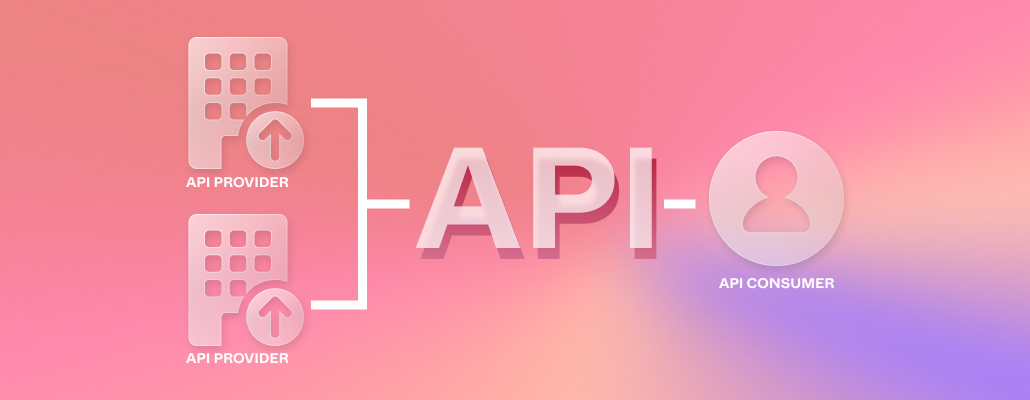
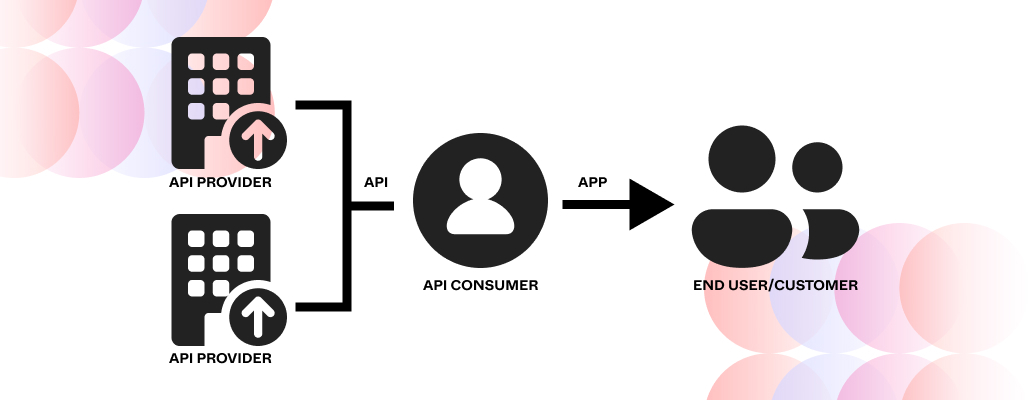
An e-commerce application, for example, might have separate services for user accounts, product catalog, shopping cart, and payment processing. By doing this, each service runs independently of one another, communicating via APIs. Each component, thus, can be developed, deployed, and scaled separately.
Why Microservices Architecture Is Taking Over
Let’s find out the significance of microservices architecture in detail.
Scalability Independence
The independent scaling is the biggest advantage of the microservices architecture. In a monolithic application, you would have to scale the whole application even if just one feature needed more resources, while microservices allow scaling of individual services according to demand.
You can scale only the particular service if, say, your payment service experiences high traffic during sales. In this way, you don't have to scale those parts that aren't required, saving money. Additionally, this approach makes scalable software solutions much more cost-effective. As a result, businesses can handle growth without massive infrastructure investments.
Faster Development and Deployment
Microservices architecture allows faster development cycles. Various teams are free to parallelize their efforts and work on different services without getting in each other's way. Moreover, each service can be updated independently of the others.
Also, if one service has bugs, you can fix them and redeploy that exact service. You don't have to redeploy the whole application. Thus, updates will happen faster with fewer risks. Moreover, this speed is crucial when talking about enterprise software development, where agility means a lot.
Better Fault Isolation
When monolithic applications fail, everything goes down. On the other hand, microservices architecture provides better fault isolation. If one service fails, others continue working. Therefore, your whole application doesn't go down because of one problem.
You can also implement fallbacks for services that fail. If the recommendation service fails, your e-commerce site still works for browsing and buying. The user experience remains better during partial failures.
Technology Flexibility
Microservices architecture allows the usage of different technologies for different services. You can build one service in Python and another in Java, based on what works best. In addition, you can adopt new technologies piece by piece, without rewriting everything.
Additionally, teams can also select tools according to specific service requirements. For example, you can use Node.js for those features that need real-time updates and Python for data processing. You, therefore, use the best technology to do the job. This flexibility is increasingly important in enterprise software development.
Microservices and Cloud Native Applications
Microservices architecture and cloud-native applications go hand in glove. Cloud platforms are actually designed perfectly for the deployment of microservices. First, scaling individual services is easy and automatic on cloud infrastructure. Then, the networking and management tools that microservices need are provided by the cloud services.
Containers and orchestration tools, like Docker and Kubernetes, are making microservices practical. These technologies handle the challenges of deploying and managing several services in concert. By using microservices, cloud-native applications can leverage cloud benefits completely. Therefore, the combination truly creates scalable software solutions.
Challenges of Microservices Architecture
While powerful, microservices architecture introduces complexity: first, you're managing many services instead of one application. That requires improved monitoring and logging systems. Secondly, network communication between services may create latency and failure points.
Besides, it's difficult to guarantee data consistency across services. In the case of dependent services, testing becomes more complex. In addition, you need experienced teams who know about distributed systems. Hence, development and operations expertise for microservices must be more sophisticated.
When to Choose Microservices
Microservices architecture makes sense for specific situations: first, when expecting great growth and needing scalable software solutions; second, when several teams are working on the application simultaneously.
Additionally, microservices go well for complex applications with different business functions. Besides, they're perfect in cases when various application parts require different scaling. Furthermore, microservices fit just right if there is a need to update features quite frequently without full redeployments. That is why it is useful for growing companies and enterprise software development projects.
When to Stick with Monoliths
But microservices are not the solution to everything. For small applications with a limited number of features, it is better to begin with monoliths. If your team does not have experience with distributed systems, it would be safer to start with a monolith. Also, where speed to market is more important than scalability, simple architectures launch faster.
Moreover, you can always migrate from monolith to microservices later on. Therefore, starting simple and evolving makes sense for many startups and early-stage projects.
Best Practices for Implementation
The best practices to succeed with microservices architecture include designing the services around business capabilities, not around technical layers; making each service have its own database, if possible; and using proper API versioning to avoid breaking changes.
Also, invest in good monitoring and logging from the start. Furthermore, use API gateways to manage the communication between services. Finally, implement automated testing and deployment pipelines. Hence, your microservices ecosystem will be manageable and reliable.
How Tangent Technologies Implements Microservices
Tangent Technologies designs, develops, and delivers scalable software solutions based on microservices architecture. We understand both the pros and cons of this approach and therefore guide clients towards the right architectural decisions.
We offer:
-
Microservices Design: Proper service boundaries and architecture
-
Cloud Native Applications: Complete cloud platform integration
-
Enterprise Software Development: Scalable solutions for large organizations
-
Migration Services: Progressively migration of monoliths toward microservices
-
DevOps Excellence: Automated deployment and monitoring
Our team has experience in creating scalable software solutions using microservices architecture. We know when to recommend microservices and when simpler approaches work better.
Let's build scalable, resilient applications together.
Connect with Tangent Technologies today.
Conclusion
"Any organization that designs a system will produce a design whose structure is a copy of the organization's communication structure." - Conway's Law
Microservices architecture is becoming the default for scalable software solutions because it solves real-world problems that growing businesses face. It allows for independent scaling, faster development, better reliability, and technological flexibility.
However, this is no silver bullet for all contexts. The key is knowing when microservices architecture makes sense and implementing it correctly. In this blog, we've looked into some reasons why microservices have now become the new standard for enterprise software development. We hope you find this blog useful.
FAQs
1. What is microservices architecture?
In microservices architecture, the approach is to build an application as a collection of small, independent services, not as a single large system. Each service implements certain business functionalities, is independently deployed, and communicates with others using APIs, which offers higher scalability and flexibility.
2. How does microservices architecture enable scalable software solutions?
Microservices architecture has enabled scalable software solutions through scaling different services independently, depending on the demand. Instead of scaling entire applications, you scale just those components that require more resources. Growth tends to be considerably less costly and far more efficient.
3. What are cloud native applications?
Cloud-native applications are those designed and developed to operate on cloud environments, usually following microservices architectures, using containers and orchestration software. These applications utilize the benefits brought about by cloud computing, such as auto-scaling, high availability, and managed services, for better performance and reliability.
4. At what point should microservices be used in enterprise software development?
Microservices should be used in the development of enterprise software when it expects significant growth, handles complex applications with diverse functionalities, has several teams for development, requires scaling different features independently, and needs frequent updates without full redeployment of systems.
5. What are the major challenges in microservices architecture?
The major challenges include added complexity in managing a multitude of services, overhead in communication at the network level, data consistency across services, more complex testing requirements, need for sophisticated monitoring, and requirement for experienced teams who understand distributed systems.