Static vs. Dynamic Websites: What are the differences?

When it comes to planning how to make a website, knowing which type of website works best for you, and specifically for the functionality of your site may affect how you choose to build it. Most websites can be defined as static vs dynamic websites. Another option is hybrid means which refers to a mixture of static and dynamic web pages.
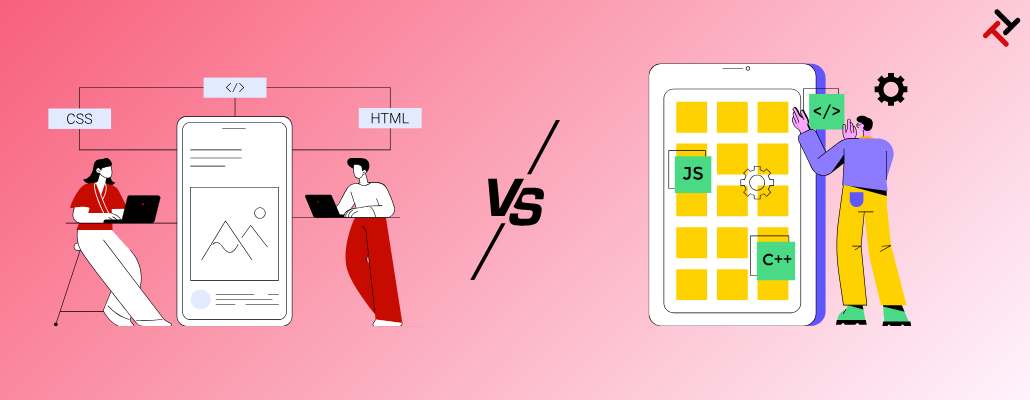
In the context of website creation, static and dynamic refers to the ways in which websites deliver and display content. The key difference between static websites vs dynamic websites is that static websites have stable content, where every user sees the exact same thing on each individual page whereas dynamic websites pull content on the fly. In this blog, we discuss about a static website, a dynamic website, and the key differences between a static website vs dynamic website.
What is a Static Website?
A static site has fixed web pages showing everyone the same information. Static sites are built with HTML, CSS, and JavaScript, and each page is a separate HTML file. When someone visits a static site, the server sends the page in its current state, not processing or fetching from a database.
Examples of Static Sites
-
Personal portfolio sites
-
Small business sites (non-commerce)
-
Brochure sites
-
Landing pages
-
Resumes or CV sites
Benefits of a Static Website
Let’s put some of the incredible benefits of a static website on paper.
1. Fast Page Loading
-
No server-side rendering or database queries, static websites can load incredibly, incredibly quickly.
-
Faster page speed = better search rankings and better user experience.
Improved Security
-
No database, no plugins = fewer security holes.
-
No SQL injections or CMS-based attacks.
Inexpensive and Quick to Create
-
Quick deployment
-
Ideal for companies requiring a basic online presence quickly.
-
No need for costly hosting services.
Low Maintenance
-
No need to update or do technical maintenance regularly.
-
Great for websites that will not be updated often.
Drawbacks of a Static Website
Despite of many benefits, a static website has also some limitations and drawbacks.
Hard to Update
-
Each change must be done individually, page by page.
-
Not suitable for websites that need to be updated often.
Limited Functionality
-
No interactivity can't have user logins, dynamic content, or real-time updates.
-
Not suitable for e-commerce, blogs, or membership sites.
Scalability Issues
Every new page has to be coded separately, hence tedious for big websites and scalability issues exist.
What is a Dynamic Website?
A dynamic website generates a page dynamically by processing code and querying databases on the server before delivering the final web page to the visitor. A dynamic website creates content dynamically using server-side scripting languages (like PHP, Python, or JavaScript frameworks). Dynamic websites extract data from a database, which enables live updates and customized experiences.
Examples of Dynamic Websites:
-
E-commerce websites (Amazon, eBay)
-
Social media websites (Facebook, Instagram)
-
News and media websites (CNN, BBC)
-
Streaming websites (Netflix, Disney Plus)
-
Membership sites and blogs
Benefits of a Dynamic Website
The following are a few pros of a dynamic website.
Easy to Update
-
Alterations made to a section of the site can be replicated on every page simultaneously.
-
CMS sites (like WordPress or Wix) are easy for non-technical individuals to edit.
Improved User Experience
-
Dynamic websites can personalize content depending on the interest of users.
-
Users receive instant updates and suggested recommendations.
Scalability
-
Can accommodate thousands of pages without needing to code on a mass level.
-
Best suited for growing businesses and big sites.
Extra Interactive Features
-
Supported are user accounts, comment forums, shopping baskets, and personal dashboards.
-
More interaction = Greater retention and conversion.
Drawbacks of a Dynamic Website
Let’s talk about some of its drawbacks.
Longer Load Time
-
Needs database processing and server-side scripting to make it slow.
-
Needs caching & CDN (Content Delivery Networks) to accelerate it.
More Costly and More Complicated
Dynamic websites are more expensive to develop and need server administration and maintenance.
Static Website vs Dynamic Website: Key Differences
|
Feature |
Static Website |
Dynamic Website |
|
Content Updates |
Manual updates required |
Changes are done automatically on multiple pages |
|
Speed |
Fast page loading (no database query) |
Slower due to server-side processing |
|
Security |
More secure (no database, less vulnerable) |
More vulnerable to attacks (needs robust security) |
|
Cost |
Lower development & hosting cost |
More costly to develop & maintain |
|
Functionality |
Limited (No interactivity) |
High (User logins, real-time updates, dynamic content) |
|
Scalability |
Difficult to scale for large websites |
Easily scalable with databases & CMS |
A Hybrid Solution: Static & Dynamic Pages Combined
A hybrid website is an approach in web development where both static and dynamic pages exist on the same website. This hybrid model has the advantage of optimizing the performance, user experience, and flexibility of both types of web content.
The best of both options? A hybrid site!
A few websites employ both static and dynamic pages in one site.
Example: Real Estate Website
Static Pages
-
About Us
-
Contact Page
-
Privacy Policy
Dynamic Pages
-
Property Listings
-
User Dashboard
-
Live Chat
This method enhances speed & security while maintaining interactivity where it's needed.
When to Use a Static Site or a Dynamic Site
There are some conditions when a static website suits best and few cases when dynamic websites perform well. Let us explore.
When to Select a Static Website
✔️ You require a basic, quick-loading site (e.g., personal website or portfolio).
✔️ Your content will rarely be updated.
✔️ You require increased security with low maintenance.
When to Select a Dynamic Website
✔️ You require user interaction (e-commerce, social networks, login features).
✔️ Your site requires regular updating of content.
✔️ You require personalized content & user tracking.
At Tangent Technologies, we create fast, secure, and scalable websites that meet your needs. We care to grow your business with digital needs.
Let’s code, create, and innovate with us.
Contact Tangent Technologies today.
Final Words
In this article, we have discussed the difference between static website vs dynamic website. We have discussed what they are. So basically, there can be static or dynamic websites. A static website is a simple website with fixed content, whereas a dynamic website is an advanced website that provides different content in response to client requests. Now, you have to choose the option that suits best your dev project. Let’s ignite your digital presence and code the future.
FAQ’s
1. What are the principal advantages of a static website?
The core benefits of a static website are the following.
-
Database-free for ultra-fast performance
-
More secure, fewer vulnerabilities.
-
Less expensive, less expensive to create and host.
2. Why are dynamic websites more prevalent today?
-
Personalized content for a better user experience.
-
Simple to update & manage with CMS sites.
-
Powerful, flexible, and scalable
3. Can I make a dynamic website out of a static site?
Indeed. Most businesses begin with static websites and then release dynamic functionality through a CMS or hybrid approach.
4. What type of website is the best for SEO?
Both! Static sites download faster, and dynamic sites make it easier to change content and engage users. Optimization is the key.