Flutter vs React Native: A Complete Comparison for Developers
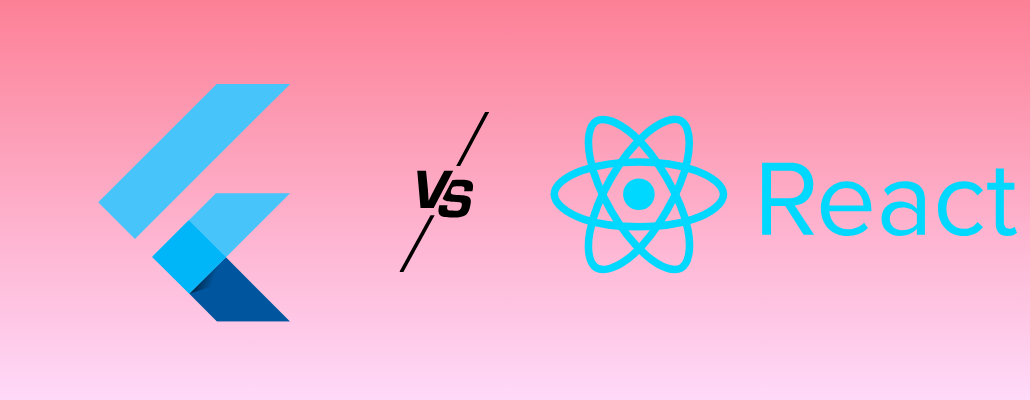
Cross-platform development frameworks Flutter and React Native allow developers to build apps that operate identically across various platforms, including iOS and Android and web applications from a unified code base.
Within the domain of cross-platform development frameworks these two platforms maintain distinct differences through their technical foundations and design principles along with their implementation capabilities.
Flutter operates through Dart programming language and delivers fast performance even though it provides restricted IDE support. The wide range of community support and fast development cycle of React Native stems from its use of familiar JavaScript language.
This blog post will provide a comprehensive comparison of two development frameworks. We will put light on Flutter vs React Native pros and cons.
What is Flutter?
The open-source UI framework Flutter emerged from Google in 2017 to create applications that operate across mobile devices and Windows and macOS systems, and Linux systems as well as web platforms. Flutter operates on a framework structure that uses Dart programming language. Big companies, including Alibaba and Philips Hue, together with Hamilton select Flutter as their development platform. Each update from Google brings enhanced performance to Flutter.
Key Features of Flutter
Let’s explore broadly some of the prominent features of using flutter.
-
Cross-platform development for building both Android and iOS apps with a single codebase.
-
Fast development with features like Hot Reload for real-time changes during coding.
-
Rich widget library offering pre-designed widgets for custom UIs.
-
High performance due to direct compilation to native ARM code.
-
Strong community support with a rapidly growing developer base.
-
Customizable designs with a flexible UI framework for creating smooth interfaces.
-
Open-source and free, with access to a wide range of plugins and libraries.
-
Easy integration with existing code and native APIs.
-
Excellent documentation making it easier for developers to get started.
What is React Native?
Facebook created React Native in 2015. It is an open-source platform based on JavaScript. It also offers a similar feature, utilizing the same codebase to develop cross-platform applications, thereby avoiding the compilation of other technologies for developing mobile applications. Skype, Instagram, Uber Eats, etc., relies on React Native for development.
Key Features of React Native
-
Cross-platform development allows you to build apps for both iOS and Android with a single codebase.
-
Native performance as it renders components using native APIs, ensuring fast and smooth performance.
-
Hot Reload feature enables real-time changes during development, speeding up the process.
-
Large community support providing a wealth of resources, libraries, and third-party plugins.
-
Declarative UI with components that define how the UI should look based on the app’s state.
-
Rich set of pre-built components to speed up development and ensure consistency across platforms.
-
Integration with native code allows for seamless use of native features and APIs when needed.
-
Open-source framework that’s free to use and continually updated by Facebook and the community.
-
Faster development with reusable components and easy-to-maintain code.
Flutter vs React Native Comparison in Tabular form
|
No. |
Feature |
Flutter |
React Native |
|
1. |
Programming Language |
Dart |
JavaScript |
|
2. |
Development Speed |
Slower due to dart |
Faster, especially for JavaScript developers |
|
3. |
Performance |
Native-like performance |
Good, but can be slower (bridge architecture) |
|
4. |
UI Customization |
Highly customizable (rich widgets) |
Relies on native components |
|
5. |
Learning Curve |
Steeper (Dart) |
Easier for JavaScript developers |
|
6. |
Community Support |
Growing, but smaller than React Native |
Large and mature, backed by Facebook |
|
7. |
Cross-Platform Support |
iOS, Android, Web, Desktop |
iOS, Android, Web |
|
8. |
Integration with Native Code |
More complex but possible |
Easy integration with native code |
|
9. |
Hot Reload |
Excellent |
Yes |
|
10. |
Use Case |
Ideal for performance-heavy, custom UIs |
Ideal for quick development and JavaScript-based apps |
Real-world Examples of Flutter
Flutter is leveraged by a lot of popular organizations to build apps due to its cross-platform functionalities and robust performance:
1. Google Pay
2. Alibaba
3. BMW
Real-World Examples of React Native
React Native is a popular framework choice for many organizations to build mobile applications. Here are some real-world examples of apps that utilizes React Native:
-
Facebook (Meta).
-
Instagram
-
Tesla (Automotive Giant of Elon Musk)
Quotes about Flutter
Quotes highlight the importance of a topic in a beautiful way and make the message more clear. Let us write few quotes about opensource framework flutter.
1. "Flutter allows you to build beautiful, natively compiled applications for mobile, web, and desktop from a single codebase." - Google
2. "Flutter's expressive and declarative UI framework makes it easy to build visually appealing and interactive applications." - Developer Opinion
3. "With Flutter, you get access to a growing ecosystem of packages and plugins, making it easier to integrate with various services and functionalities." - Community Observation
Quotes about React Native
1. "Learn once, write anywhere." - React Native's core philosophy, emphasizing code reusability across platforms.
2. "React Native provides a strong foundation for building high-performance mobile applications with a native-like user experience." - Facebook
3. "React Native's large and active community offers excellent support, extensive documentation, and a wealth of third-party libraries." - Community Benefit
4. "React Native allows developers to leverage their existing JavaScript skills to build mobile applications, lowering the barrier to entry." - Developer Perspective.
Confused about Flutter vs React Native?
No worries!
At Tangent Technologies, we provide satisfactory development services on both platforms; your app is built to meet the highest standards, no matter the choice.
Let’s build your dream app today.
Reach out for the best of both worlds.
Wrap Up
In conclusion, both Flutter and React Native have their unique advantages and disadvantages. We talked about Flutter vs React Native performance, their design differences, and Flutter vs React Native pros and cons. The choice between them largely depends on the project’s specific requirements, the development team’s expertise, and long-term goals. We hope this blog is valuable and tech-oriented for developers.
FAQ’s
1. What is the primary difference in Flutter vs React Native comparison?
The primary difference is that Flutter uses Dart, while React Native uses JavaScript. The primary and most prominent difference is about their languages.
2. Which framework is better for fast app development: Flutter vs React Native 2025?
React Native is generally better for faster app development due to its JavaScript familiarity and large community.
3. How many widgets are in Flutter?
There are mainly 14 categories into which the flutter widgets are divided. They are mainly segregated on the basis of the functionality they provide in a flutter application.
4. Is it easier to learn Dart for Flutter or JavaScript for React Native?
JavaScript is easier to learn due to its widespread use, while Dart requires learning a new language for developers familiar with JavaScript.