Electronic Health Records (EHR): Transforming Patient Care and Information Management

In modern healthcare, the adoption of Electronic Health Records (EHR) has ushered in a transformative era, revolutionizing how patient care is delivered and health information is managed. This technological evolution holds immense promise for improving healthcare quality, enhancing patient outcomes, and streamlining administrative processes. Hence, this blog will delve into the critical aspects of EHR systems, exploring their impact on patient care and information management.
1. Understanding Electronic Health Records (EHR):
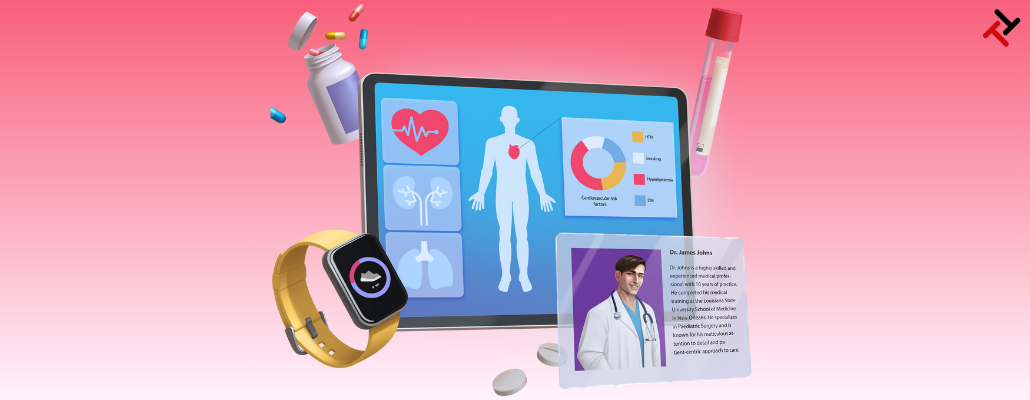
Electronic Health Records, often called EHRs, are digital versions of patients' paper charts. However, these electronic records contain comprehensive patient information, including medical history, diagnoses, medications, treatment plans, immunization dates, allergies, radiology images, and laboratory test results. Unlike traditional paper records, EHRs are accessible in real-time, facilitating seamless communication among healthcare providers involved in a patient's care.
2. Improving Patient Care:
One of the primary benefits of EHR is the enhancement of patient care. With instant access to a patient's complete medical history, healthcare providers can make more informed and timely decisions. Hence, this improves diagnosis accuracy, better care coordination among different providers, and enhances patient outcomes.
EHR systems also support clinical decision-making through integrated tools that provide alerts for potential drug interactions, allergies, and other critical information. Hence, this assists healthcare professionals in avoiding medical errors and ensuring patient safety.
3. Streamlining Workflows:
EHRs contribute significantly to the efficiency of healthcare workflows. Paper-based systems often require time-consuming tasks like manual data entry and record retrieval. However, EHRs automate these processes, allowing healthcare providers to focus more on patient care and less on administrative tasks.
Additionally, EHRs facilitate seamless communication among healthcare team members. Moreover, physicians, nurses, pharmacists, and other professionals can access and update patient records in real-time, fostering collaboration and coordination across different departments.
4. Enhancing Information Accessibility:
EHRs break down the barriers of traditional record-keeping by providing authorized personnel with instant access to patient information from any location with secure internet connectivity. Hence, this is particularly beneficial in emergencies, where quick access to critical medical data can be a matter of life and death.
However, patients can also access their EHRs, empowering them to participate actively in their healthcare. This transparency fosters a more engaged and informed patient population.
5. Data Security and Privacy:
Data security and patient privacy concerns become paramount as the healthcare industry transitions to digital records. EHR systems employ robust security measures to safeguard sensitive health information, including encryption, authentication, and access controls. However, adherence to strict regulatory standards, such as the Health Insurance Portability and Accountability Act (HIPAA), ensures that patient privacy is a top priority.
6. Interoperability Challenges:
While EHRs offer immense benefits, challenges related to interoperability persist. The seamless exchange of patient information between different EHR systems and healthcare organizations remains a complex issue. Hence, efforts are underway to establish standardized protocols and promote interoperability, allowing for more comprehensive and connected patient care.
7. Future Trends and Innovations:
The evolution of EHRs continues with ongoing advancements and innovations. Artificial intelligence (AI) and machine learning are being integrated into EHR systems to provide predictive analytics, personalized treatment recommendations, and more efficient data management. Hence, mobile health applications and wearables extend the reach of EHRs, enabling continuous monitoring and proactive healthcare management.
Conclusion:
In conclusion, Electronic Health Records have become a cornerstone of modern healthcare, transforming patient care and information management. Hence, as the healthcare industry continues to embrace digitalization, the potential for EHRs to enhance efficiency further, improve outcomes, and drive innovation remains vast. With ongoing efforts to address challenges and promote interoperability, EHRs are poised to play a pivotal role in shaping the future of healthcare delivery. Visit Tangent blog for more health-tech articles and blogs.