8 Stages of Mobile App Development Lifecycle

As you all know, mobile app development has simplified our lives and made things easier. One can listen to his favorite audiobook, hire a rider, and pay his bills online. Mobile app development is not just a skill now; it's an entire business today. You can earn millions and hit the jackpot if you launch your own mobile app or build a tech startup of app development.
Now the question arises is it hard to develop an app? Is it a skill you can learn on your own? Yes obviously, it's an IT Skill and fortunately there is plenty of content on YouTube by which you can master mobile app development. Hence it's a skill, one can learn if he is willing. Mobile app development services are a necessity in this modern era.
Approximately 42% of startups now have a mobile app, and 30% of small businesses intend to develop their apps in the near future. Moreover, there are over 1.6 million apps in the Apple App Store and over 2.6 million in the Google Play Store.
There are a total 8 stages of mobile app development cycle. A mobile app development company provides services and assistance in all these 8 stages of app development lifecycle to clients. In this guide, we will discuss the core concept of mobile app development and then shed light on these 8 stages of mobile app development lifecycle, and then take you through the entire development process.
What is Mobile App Development?
Mobile app development is a set of multiple processes for creating software applications that run on mobile devices, such as smartphones and tablets. These apps can be downloaded from app stores like the Apple App Store or Google Play Store, or they can be accessed through a mobile web browser.
8 Stages of Mobile App Development Lifecycle
Let us enlist these 8 stages and discuss them in detail one by one.
- Ideas Research/Planning Stage
- Technical Feasibility / Backend Assessment
- Prototyping
- UI/UX Designing
- Coding/Development
- Testing
- Deployment
- Monitoring and Updates
Once you answer all the questions mentioned above, you can move further to the next step.
1. Ideas Research Stage
The journey of mobile app development always begins with an idea. An idea is a spark that ignites the fire of innovation and converts dreams into reality. Therefore, ideas research and planning is the first and foremost step of the entire mobile app development cycle. It's a simple and obvious step. However, transforming your concept into a fully realized app that users download and love requires mindful and deliberate planning.
For your app idea to succeed, it must address real-life challenges effectively. To ensure this, consider the following essential questions:
- What is the primary goal of your app?
- Who is your target audience?
- What unique features will set your app apart from others?
- How will you allocate resources for all the stages of app development?
- Who are your competitors?
- What is your timeline for development?
- How will you promote your app?
- How will you ensure app quality and updates?
Above are a few worthy queries that you must consider in the thoughtful stage of ideas discussion.
2. Feasibility of App/ Back-End Assessment
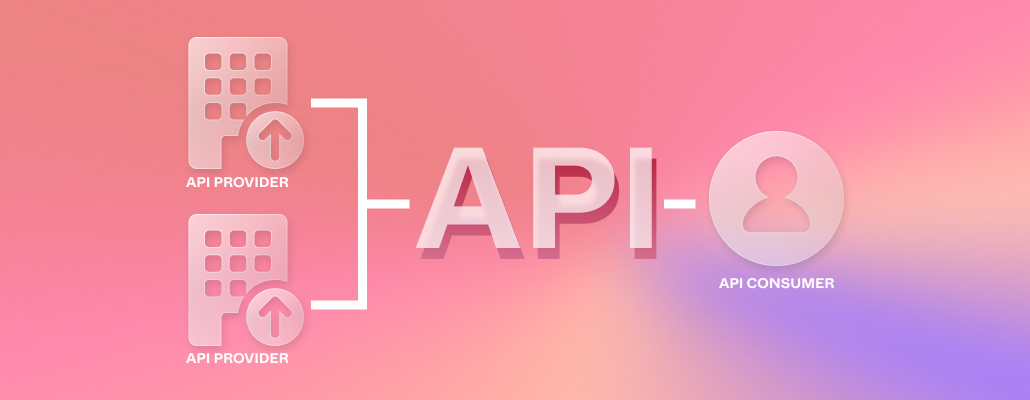
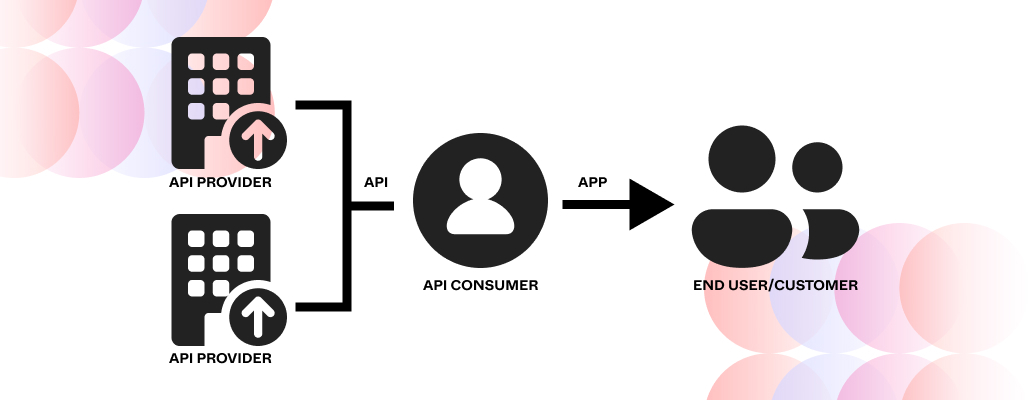
After the basic planning and market analysis, the next step is about back-end assessment of the mobile application, Once you’ve decided how your app will look, it’s time to think about how it will work behind the scenes. That process is called back-end assessment of mobile applications, This includes things like APIs, data flow, servers, push notifications, and how everything connects.
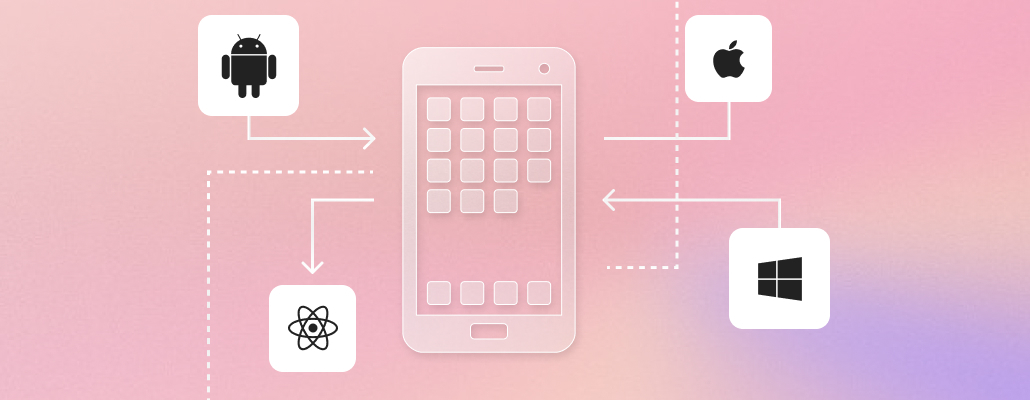
The back-end setup might differ depending upon the platform of app development whether you’re building for Android or iOS. It can also vary based on the device type like smartphones, tablets, or wearables.
During this process, you might discover that some of the features you thought about in the planning stage aren’t practical. That’s perfectly okay! No need to worry. It’s a chance to review and adjust your ideas to make them work better for your app.
3. Prototyping
First of all, let us tell you what is prototyping. Prototyping in app development is the process of creating a preliminary, interactive version of an app that demonstrates its design, visual elements, and user experience.
It's like a blueprint or a model that allows you to visualize and test the app before investing heavy resources in full-scale development.
At this stage after proper back-end assessment, it’s time to create a quick prototype. The best way to understand how an app works and feels is by interacting with it directly. Therefore, build a prototype and let users try it out to see how the function of workflow in real-time. Gather honest feedback, it’s invaluable for guiding you in the right direction as you move forward in the development process.
4. UI/UX Designing
Now comes the stage of Mobile app designing. Have you ever downloaded some apps from Play Store that are not so good functionally but their catchy interface forces you to use them? Yes that's exactly the power of UI/UX designing. It is all about making the app so intriguing and interesting to influence the mind and gain the attention of potential users. It is about creating how an app looks and works. Mobile app designing includes choosing colors, fonts, and other visuals while also making sure the app is easy to use and works well for users.
- The UX designer's job is to focus on developing a smooth and flawless connection between different design elements.
- The UI designer works on the overall look and feel of the app, making it visually appealing and aligned with your brand.
Together, they produce combined visual guides and blueprints that serve as a roadmap for your developers. These blueprints clearly communicate your vision for the final product and how it should engage with users. A good mobile app development company features an entire team of competent UI and UX designers. Remember, always customer experience can make or break your business.
5. Coding
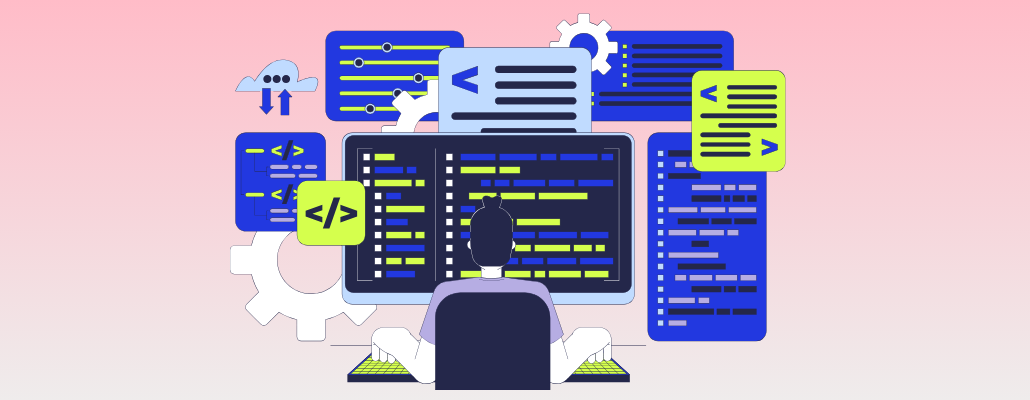
The development stage is where the app takes shape. Developers and Coders transform the design into functional code, building the app's front-end and back-end. This involves writing code for the user interface, server-side logic, and integrating APIs. For this stage, coding and programming skills are non-negotiable and the name of the game. However, if you lack sound knowledge of programming, don’t worry! YouTube is an excellent mentor to learn the basics of coding. Alternatively, you can hire an expert for this purpose.
6. Testing
Testing is another fundamental phase in the app development lifecycle of utmost importance. Here, the application is properly examined to identify and rectify errors, bugs, or inconsistencies. Furthermore, testing aims to make sure that your app functions efficiently as per your needs, meets its customer expectations, and fulfills the market gap in a better way.
The testing stage typically follows the development phase and precedes the deployment phase. It involves a systematic approach to evaluate the app's:
- Functionality: Does the app perform its intended tasks correctly?
- Usability: Is the app easy to navigate and use?
- Performance: How fast and responsive is the app?
- Security: Is the app secure enough against vulnerabilities and attacks?
- Compatibility: Does the app work across different devices and operating systems?
Testing can reduce costs with early bug detection issues. Finding and fixing bugs early in the development cycle is significantly cheaper than addressing them later after the app is released.
7. Deployment
Next stage of mobile app development lifecycle is “Deployment”. At this point, your app should be ready for submission. Choose a launch date and prepare for the formal release. However, launching procedures differ between Android and iOS, so make sure you're well aware and familiar with the requirements for each platform.
However, you cannot consider this as the end of your journey, it’s a fresh beginning. Once your app is live, user feedback will start rolling in, and it’s important to take this feedback into account for future updates. This begins a new development cycle with a new aim of improving the app. You know the concept of continuous improvement CI. That is applied here.
During this entire phase, it’s highly important to monitor your resources and stay committed to the long-term success of your project. And with that, you've reached the final stage of the process!
By now, you should have a clear understanding that the entire mobile app development lifecycle is not a simple task. Beyond managing these complex stages, it’s important to remember that the app market is highly competitive. New app developers need to be very careful and vigilant in their processes, as even a small mistake could result in huge losses of valuable market opportunities.
8. Monitoring and Updating
This is the final stage of your mobile development process before the final release. Make sure to monitor your app’s performance properly after you launch it. You need to ensure it doesn’t crash and fix the bugs or errors before they occur. Also, analyze the metrics and know how the app is being used and where to put more effort in the future app.
Customer Feedback
Constantly monitor the customer feedback on your app. The feedback will help you know about your app’s performance and reveal where you need to improve.
Some businesses don’t know how important feedback is, leaving the money on the table. But app growth will surely struggle if the reviews are bad. Users will never use an app with bad reviews or an app that doesn’t have user support. Answer your customers’ queries, and user requests and reach them in time if they face any issues while using your app.
You can allow your users to reach you through:
- Feedback surveys.
- Social media.
- In-app survey.
- Email feedback.
- Customer Support requests
Update
You will have to update your app very often to stay on top. Make sure you know who will handle these matters after the launch, like who will fix the bugs and be responsible for the updated features according to the user requests.
Final Thoughts
“The future of technology is mobile, and the future of mobile is apps."
Finally, concluding the discussion, the mobile app development lifecycle is a comprehensive and structured process. It needs a strategic approach. Every step we mentioned above, you cannot ignore. Minor things play a vital role in the app’s performance and user satisfaction. Believe me app development has a tremendous scope with boundless employment opportunities. Regular maintenance and updates ensure the app stays relevant, secure, and efficient long after its initial launch.
Should You Start Your App Development Journey?
Tangent Technologies is a leading IT and mobile app development company in Pakistan. If you're going to build an app for internal use or customers, we are here to assist you in each phase of the app development journey.
With our expertise in building apps that meet business needs and deliver great user experiences, we're ready to bring your ideas to life.
Got a mobile app idea? Contact us today!
Our experts guide you every step of the way.
FAQ’s
1. How long does the mobile app development lifecycle take?
Ans. The timeline can vary based on the complexity of the app. Typically, it can take anywhere from 3 to 9 months or longer, depending on the size of the project and the resources available.
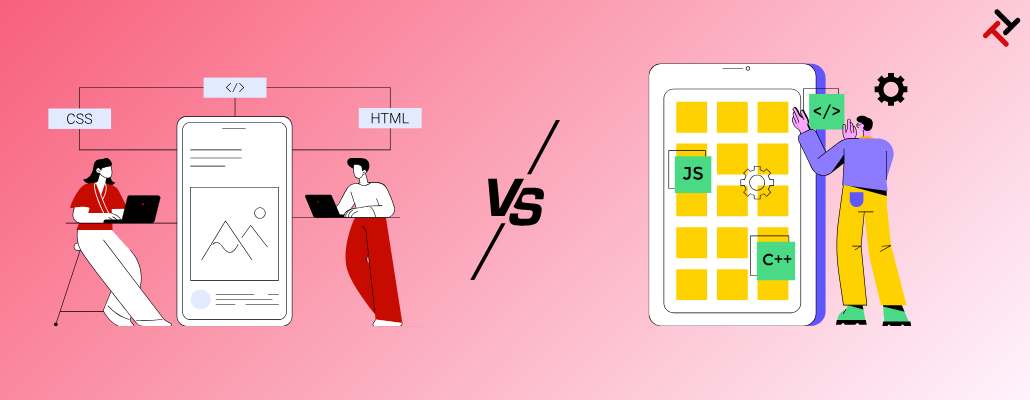
2. What is the difference between native and hybrid apps?
Ans. Native apps are developed for a specific platform (iOS or Android), while hybrid apps are built to work across multiple platforms using a single codebase.
3. How important is testing in the mobile app development lifecycle?
Ans. Testing is a must-do task to make sure the app functions properly as required, and is secure enough. Moreover also to check whether our app offer provides a pleasant user experience or not.
4. Can I update my app after it’s launched?
Ans. Yes, you can update your app after launch. Regular updates are essential for fixing bugs, improving performance, and adding new features to keep the app relevant and engaging for users.
5. What happens if my app gets rejected from the app store?
Ans. If your app is rejected, the app store typically provides feedback on why it was rejected. You will need to address the issues and resubmit the app. Common reasons for rejection include violating guidelines or technical issues.