Cloud vs. On-Premise Software Development: Which Model Wins in 2025?
It was a stormy Monday morning at a tech startup in Austin.
The CTO, Nina, was staring at two proposals on her screen.
One promised speed, flexibility, and lower costs, the cloud way.
The other offered control, security, and legacy stability, the on-premise route.
Her team had spent weeks debating it.
Developers wanted the cloud. The finance head wanted cost clarity. The compliance team wanted control.
And Nina? She just wanted to sleep without thinking about servers at 2 a.m.
That’s the story playing out in thousands of companies today.
Software development isn’t just about writing code anymore; it’s about where your code lives, scales, and thrives.
So, as 2025 unfolds, the big question is louder than ever:
In the battle of Cloud vs. On-Premise, which model actually wins?
Understanding the Two Terminologies
Before we crown a winner, let’s get clear on what we’re comparing.
Cloud Software Development
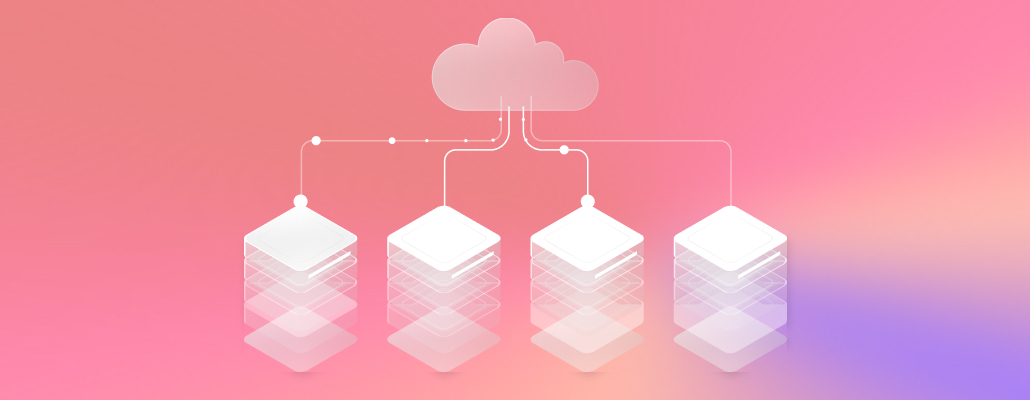
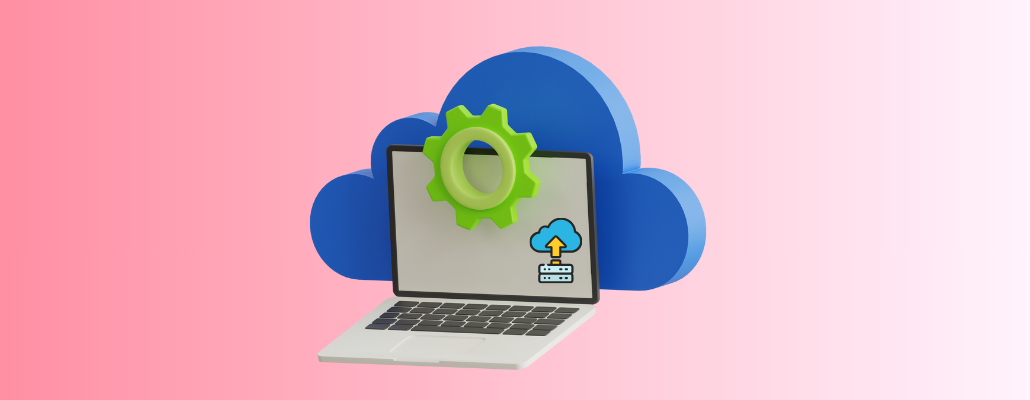
Cloud-based software runs on remote servers managed by third-party providers like AWS, Google Cloud, or Azure.
You rent space, scale on demand, and pay for what you use.
Quick snapshot of cloud development:
-
Hosted and managed by providers.
-
Highly scalable and remote-friendly.
-
Pay-as-you-go model.
-
Continuous updates and auto-patching.
On-Premise Software Development
On-premise means you own it, host it, and manage it within your physical infrastructure.
It’s old-school control with new-age challenges.
Quick snapshot of on-premise development:
-
Hosted locally within the company's servers.
-
One-time licensing costs, but ongoing maintenance.
-
Complete data control.
-
Slower scaling but higher security visibility.
The Battle of Benefits: Cloud vs. On-Premise at a Glance
|
Criteria |
Cloud Software Development |
On-Premise Software Development |
|
Setup Speed |
Instant deployment |
Time-intensive installation |
|
Scalability |
Elastic scaling with demand |
Limited by hardware |
|
Cost Model |
Subscription-based |
High upfront investment |
|
Maintenance |
Vendor-managed |
Internal IT burden |
|
Security |
Shared responsibility |
Direct in-house control |
|
Customization |
Limited by the vendor |
Deep customization possible |
|
Remote Access |
Accessible anywhere |
Restricted to local networks |
|
Innovation Speed |
Fast updates and releases |
Slower upgrade cycles |
Why Cloud Software Development Is Dominating 2025
The year 2025 has been the biggest yet for cloud adoption and for good reason.
Startups, enterprises, and even government organizations have moved past the “testing” phase and are fully committed.
Here’s why the cloud model is winning hearts (and contracts):
-
Agility First: Teams deploy in days, not months.
-
Lower Entry Costs: Pay only for what you use, not for what you might need later.
-
Automatic Innovation: Continuous delivery pipelines mean you’re always up to date.
-
Remote Workforce Ready: Perfect for global teams working from anywhere.
-
Disaster Recovery Made Easy: Backups, redundancy, and quick restores built in.
It’s like renting a fully automated factory where robots upgrade themselves every night.
You don’t buy the building, you just pay for production power.
Why Some Still Bet on On-Premise
Yet, not everyone’s abandoning the old fortress.
On-premise software development continues to hold ground, especially for enterprises with sensitive data, compliance-heavy industries, and deep integrations.
Here’s why:
-
Complete Data Control: No third-party servers. You own the fortress.
-
Tailored Customization: Modify systems down to the code level.
-
Predictable Costs: Once installed, no recurring cloud bills.
-
Offline Reliability: Works even with zero internet.
For banks, defense contractors, and medical systems, control often outweighs convenience.
But in 2025, that control comes at a higher price: less flexibility, slower innovation, and heavier maintenance loads.
The Hybrid Middle Ground
The smartest teams aren’t choosing sides anymore. They’re blending them.
Hybrid software development combines the best of both worlds.
Imagine your core data stays on-premise (for security), while your app logic and scaling live in the cloud.
That’s like keeping your crown jewels in a vault but letting your sales team roam free with mobile access.
Hybrid development advantages:
-
Balanced control and flexibility.
-
Cost efficiency with partial cloud storage.
-
Easier compliance while enabling innovation.
-
Smooth scalability for growing businesses.
2025 is shaping up to be the hybrid revolution year, where companies stop debating and start integrating.
2025 Trends Redefining Software Development
Emerging software development trends are rewriting what businesses expect from their tech stacks.
Here’s what’s leading the charge:
-
AI-Assisted Coding: Developers are using AI copilots to write, test, and debug faster.
-
Serverless Architecture: Developers focus on logic, not infrastructure.
-
Microservices Explosion: Modular builds make apps faster to scale.
-
Low-Code Platforms: Speed up innovation for non-tech teams.
-
Sustainability Focus: Green computing and energy-efficient servers gain traction.
The future of software development is no longer about where your servers live. It’s about how fast your ideas come to life.
Choosing the Right Model: What to Ask Before You Decide
Still unsure whether to go cloud or on-premise?
There is no one-liner for this question…It depends upon those particular conditions, you are going to execute that project.
Here’s your decision checklist:
-
How sensitive is your data?
-
What’s your team’s technical maturity?
-
Do you need scalability or stability?
-
How much budget flexibility do you have?
-
How often will your product evolve?
If innovation speed and scalability matter most, cloud wins.
If compliance and control are key, on-premise stands tall.
If you want both, hybrid is your sweet spot.
At Tangent Technologies, we’ve worked with both sides of the spectrum.
We’ve built on-premise ecosystems that handle terabytes of data and deployed cloud-native apps that scale to millions of users overnight.
Our belief?
Software development isn’t about picking a side. It’s about picking the strategy that grows with you.
Whether you’re migrating to the cloud, optimizing your on-prem infrastructure, or exploring hybrid solutions, we design, develop, and deploy software that performs, scales, and lasts.
If you’re ready to make the smart move, not just the trendy one, let’s talk.
Tangent Technologies builds future-ready software development solutions that balance speed, security, and scalability.
Let’s future-proof your business before your competitors even begin to think about it.
Final Words
The cloud vs. on-premise debate isn’t about who’s right. It’s about what’s right for you.
2025 is the year of choice, flexibility, and forward-thinking development.
Whether your next big build lives in the cloud, behind your firewall, or in a hybrid world, what matters most is agility.
Because in modern software development, the fastest to adapt is the first to win.
FAQs
1. What’s the biggest advantage of cloud-based software development?
Scalability and speed. You can deploy, test, and update your product faster without maintaining physical servers.
2. Is on-premise software development dead?
Not at all. Industries like finance, healthcare, and defense still rely heavily on on-premise setups for security and compliance.
3. Can we combine both models?
Yes! A hybrid approach lets you store sensitive data locally while running scalable operations in the cloud.
4. What are the cost differences between cloud and on-premise?
-
Cloud: Pay-as-you-go model, lower initial costs, recurring fees.
-
On-Premise: High upfront investment, lower recurring costs, higher maintenance.
5. How do I decide which setup fits my company best?
Evaluate based on your:
-
Data sensitivity.
-
Growth goals.
-
Infrastructure resources.
-
Regulatory environment.