15 Best JavaScript Frameworks to Use in 2025

A JavaScript framework is a pre-built library offering tools and features for full-stack or front-end development. It helps developers build and manage complex web apps by organizing code and providing ready-to-use tools. Since its launch in 1995, JavaScript has become a favorite among programmers, transforming web app development. In this blog, we compiled a list of the 15 best javascript frameworks to use in 2025 and we will discuss them one by one.
Best JavaScript Frameworks and Libraries to Use in 2025
The following list includes the best javascript frameworks to use in 2025 that will make the development process smooth and result-oriented.
1. ReactJS
One of the most influential JavaScript libraries for building the front end is React. This good approach that, is being developed by Facebook, is maintained
ned by a community of individual developers allows building reusable UI components by front-end developers.
2. VueJS
Vue.JS is one of the most flexible front-end JavaScript frameworks, created in 2016. Because of its progressive, capability of getting high-end single-page applications packed in dual-mode, Vue.Js gained much popularity. The framework operates with the MVVM (Model-View-View Model) architecture pattern. Moreover, Vuejs is a simple, flexible, unconstrained, and easy-to-use JavaScript framework for web development.
3. AngularJS
Angular is a front-end JavaScript framework that Google has developed in order to build front-end web applications. Now it's an open-source maintained by a community of individual developers. Angular uses a component-based architecture and employs a declarative approach to building user interfaces while also providing a powerful set of features for developing reusable, maintainable, and testable code.
4. Svelte
Svelte JS is a user-friendly framework used for the development of web applications. Its popularity and usage among developers began to rise since its introduction in 2016. Unlike Vue.js and React, which use a virtual DOM, Svelte JS creates HTML, CSS, and JS code independently. This framework is capable of developing web applications differently and does not require too much from users, which enables the user to use less power from the browser.
5. Backbone.JS
Backbone.js is one of the most commonly used JS libraries and also stands out as the top JS framework to use, learn, and understand. Today, Backbone.js is used to develop single-page websites. The goal of Backbone.js is to make programming tasks easier by providing complex features that require less code.
6. Polymer
Polymer is an open-source JavaScript library created by Google that provides developers with everything they need to create cool web pages and web apps. It supports one-way and two-way data binding that makes it all-in-all application development possible. The core library of Polymer carries with it the most unique selling proposition.
7. Ember.js
Ember.js is an open-source JavaScript framework organized under the model-view-controller (MVC) paradigm, highly modular and scalable in design. Ember provides a set of conventions that are highly productive for building web applications. Ember's main features include a robust routing system, a built-in data management library (Ember Data), and a powerful handlebars template engine.
8. Sencha Ext Js
Sencha Ext JS is a popular JavaScript front-end framework loaded with features. It helps develop cross-platform, data-intensive HTML5 applications for modern devices. Sencha Ext JS consists of more than 140 user interface widgets, including a pivot grid, menus, toolbars, panels, an HTML5 calendar, and a D3 adapter.
9. Node.JS
Node.JS is one of the most popular JavaScript back-end frameworks. Developed as an open-source server-side development framework, Node.js is based on Google's Chrome JavaScript V8 Engine. Node.js is lightweight and fast because it uses non-blocking I/O models. It is good for data-intensive real-time applications that run on distributed devices. It uses an event-driven model. Most developers can easily embark on backend development even without prior programming knowledge, as it streamlines the process of creating server-side applications.
10. Express JS
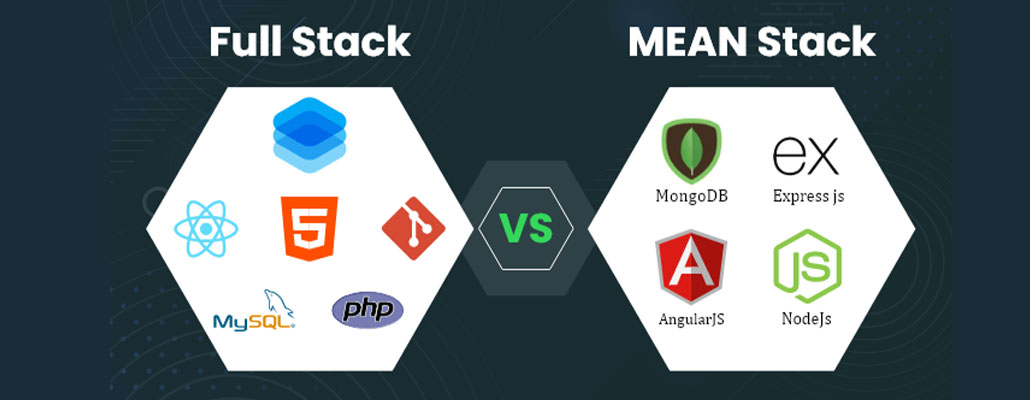
Express JS is a minimalist, open-source backend framework for JavaScript that operates on Node.js. This framework has gained significant traction among developers for crafting complex APIs and web applications. As part of the MEAN or MERN stack, it has become the go-to choice due to its widespread adoption in recent years. Therefore, if you're seeking an ideal JavaScript framework for backend development, look no further than Express JS.
11. Nuxt JS
Nuxt.js is a JavaScript framework tailored for backend web development and built upon Vue.js technology. It facilitates the creation of server-rendered Vue.js applications while incorporating features like automatic code splitting, dynamic imports, and hot module replacement. Additionally, Nuxt offers an option called Nuxt generate that enables users to create a static version of your application.
12. Jest
Jest is a particularly useful JavaScript testing framework for unit and snapshot testing of JavaScript applications. Though predominantly built for React and React Native applications, it can also be used for testing other JavaScript libraries and frameworks. Jest is quick and easy to set up with several built-in features such as automatic mocking, an assertion library, and test coverage reports.
13. Meteor JS
Meteor.js is a full-stack JavaScript framework specifically designed for the development of mobile apps and web apps based on Node.js. The important fact is that this implies you can use the same programming language-JavaScript-on both the client and the server using MeteorJS. Meteor.js comes with a bunch of libraries and tools, making it easier to build real-time.
14. Aurelia
Aurelia, a front-end JavaScript framework, is designed to build browser, desktop, and mobile applications. It is intended to be compatible with the web platform specifications and use convention over configuration. Aurelia is not a single, monolithic framework. Instead, it is broken down into feature-oriented modules.
15. Gatsby JS
Finally, the last but probably one of the best JavaScript frameworks of the backend is GatsbyJS. It is a modern, customizable static-site generator based on GraphQL, introduced in May 2015. It supports the development of high-quality, SEO-friendly web apps. This framework generates the bulk of its HTML code client-side at build time instead of rendering anything on the server. Alongside all of these features, Gatsby JS adds more security.
Supercharge your projects with the right JavaScript framework.
Tangent Technologies, excels in building high-performing applications using the best frameworks of 2025.
Let’s code your success story with us,
Partner with Tangent Technologies today.
Final Words
“Generally, the craft of programming is the factoring of a set of requirements into a set of functions and data structures.” - Douglas Crockford
Just knowing different JavaScript frameworks isn't enough to choose the right one. A popular framework usually means a large developer community, making it easier to learn. You should also consider the environment where the framework will be used and understand its features and complexities. Pick the framework that best fits your needs by analyzing multiple factors.
FAQ’s
1. What are the most popular JavaScript frameworks?
The most popular JavaScript frameworks are Vue.js, angular.js, react.js, Vue.js, Meteor.js, express.js, and many more.
2. Can you create web applications without using JavaScript frameworks?
Yes, it is possible to develop any web application without the JavaScript frameworks.
3. Which Are the best javascript frameworks to use in 2025 for Front-End Development?
Following are the most used and preferred best javascript frameworks for front-end development.
1. React
2. Angular
3. Vue.js
4. Svelte
5. Next.js
4. Which Are the best javascript frameworks to use in 2025 For Backend Development?
A few of the best Javascript frameworks for backend development are the following.
1. Express.js
2. Nest.js
3. Meteor.js
4. Koa.js
5. Sails.js