Native vs Hybrid App: Which Development Approach to Choose?
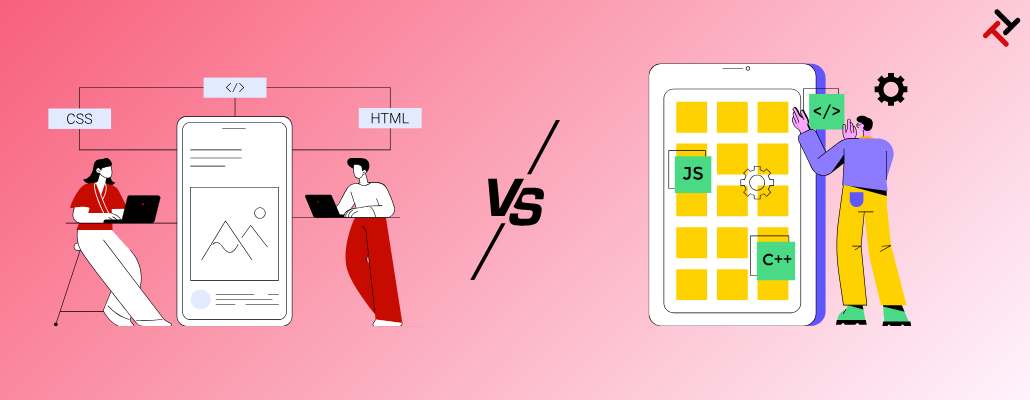
Mobile apps are a clear channel between digital businesses and their target audience. But, when it comes to app development, the contrast between native and hybrid is often confusing. Both have some advantages and disadvantages. For an easy understanding, let's elaborate concept of native vs hybrid with a fancy example.
Jinnie loved to bake. Hence, she was determined to create an application through which recipes could be shared and the audience was educated. She pictured a live app where users could browse recipes, watch videos of the same, and share their concoctions. When she sat down with Leo, her developer friend, it became a huge dilemma-would she build a Native or Hybrid app? Who is better? native vs hybrid app.
Leo explained.
1. A Native app would give her users the best of both worlds custom bakery for each strong neighborhood. Although it would take much more time and resources to set up, it would create a fine and sweet-smooth experience for the users on both platforms equally as if they were in the actual bakery.
2. A hybrid app was like opening a food truck. With the hybrid app, she could serve both neighborhoods in one setup. This would be quicker and cheaper but would deliver an experience better than a proper bakery.
In this guide, we describe about the core concept of native apps, and hybrid apps and the differences of native and hybrid apps. Moreover, we will also highlight the benefits of native and hybrid apps in this blog.
What is a Native App?
Native apps are specially designed for a certain operating system, such as iOS or Android. Usually, these apps are being built using the platform programming languages (Swift or Objective-C for iOS and Java or Kotlin for Android). Due to the platform-specific nature of native applications, such applications have the ability to maximize all device capabilities which include performance and user experience.
Key Features of Native Apps
-
High Performance - Native apps are fast and responsive as they are built using the platform’s core programming languages and APIs.
-
User Experience - These apps follow the specific UI guidelines of the operating system, resulting in a smooth and intuitive user experience.
-
Device Integration - Native apps have access to all device features, such as GPS, camera, microphone, and hardware sensors.
-
Security - These apps offer robust security features, which is crucial for data-sensitive applications.
When to Choose Native Apps
-
When you need high performance, such as in gaming or graphics-intensive applications.
-
If your app requires full access to the device’s hardware and software features.
-
When you want to deliver a highly polished and platform-specific user experience.
-
If budget and development time are not major constraints.
Examples of Native Apps are Google Maps, Instagram, YouTube, and Word.
Pros of Native Apps
-
Superior performance and speed.
-
Full access to device features.
-
Strong security and reliability.
-
Better integration with the device’s operating system.
Cons of Native Apps
-
Development is time-consuming and expensive.
-
Separate codebases for iOS and Android require more maintenance.
What is a Hybrid App?
These are applications created with web technologies such as HTML, CSS, and JavaScript. They run in a container native to the device and use built-in browser engines to render the web content. Popular frameworks such as React Native, Ionic, or Flutter allow for the creation of hybrid apps, which look and feel like native apps.
Key Features of Hybrid Apps
-
Hybrid apps use a single codebase for multiple platforms. Consequently, they reduce development time and cost.
-
They are essentially web programs wrapped in a native shell, allowing for app store distribution.
-
Since only one codebase is used, updates and maintenance are more straightforward.
When to Choose Hybrid Apps
-
When you need to launch your app quickly on multiple platforms.
-
If you have a limited budget and development resources.
-
When your app is relatively simple and doesn’t require heavy use of device-specific features.
-
If your app requires frequent updates.
Examples of Hybrid Apps are Twitter, Gmail, and Flutter.
Pros of Hybrid Apps
-
Faster development and lower costs.
-
Single codebase for all platforms.
-
Easy to maintain and update.
-
Ideal for apps with simple functionality.
Cons of Hybrid Apps
-
Performance may not match that of native apps.
-
Limited access to advanced device features.
-
Possible challenges with complex animations or graphics.
So, we have mentioned a few of the benefits of native and hybrid apps. Now it depends upon the preferences and needs of app projects that which option suits best.
Differences of Native and Hybrid apps - Native vs Hybrid app
A Tabular Comparison
|
Feature/Aspect |
Native Apps |
Hybrid Apps |
|
Performance |
Excellent - optimized for the specific platform |
Good - can be slightly slower than native |
|
User Experience |
Best - smoothened integration with platform UI/UX |
Good - can be slightly slower than native |
|
Development Cost |
Higher - requires separate codebases for each platform |
Can mimic native UI but not as transparent and smooth |
|
Development Time |
Longer - due to separate codebases |
Lower - single codebase for multiple platforms |
|
Access to Native Features |
Full access to device hardware and APIs |
Shorter - faster to develop |
|
Offline Functionality |
Can be designed for offline use |
Limited offline functionality |
|
Maintenance |
More complex - requires updates for each platform |
Simpler - single codebase to maintain |
At Tangent Technologies, we give the digitalized shape to your new Ideas or Transformation projects. We have an enthusiastic team of app developers. We offer premium services in both native and hybrid app development. We follow a unique development process that gives your business growth timelines a competitive advantage.
Let’s dive Into Our matchless Digital Transformation Record.
Connect with Tangent Technologies.
Summing Up
We summarized the differences of native and hybrid apps and mentioned few of the benefits of native and hybrid apps in this guide. Choosing between native vs hybrid apps depends on your business goals, budget, and the app's complexity. If you need high performance, deep device integration, and a platform-specific experience, native apps are the way to go. On the other hand, if you are working with a limited budget, want faster development, and need a cross-platform solution, hybrid apps offer a balanced approach.
FAQ’s
1. Which is better, Native vs Hybrid app?
There is no perfect answer to this question. It depends upon your preferences. Native is best for performance and UX, but hybrid is faster and cheaper to develop.
2. Is Netflix native or hybrid?
Netflix is not a hybrid app. it is primarily a native app. Netflix has separate native applications for different platforms like iOS and Android.
3. What is the benefit of a hybrid approach in Android development?
Cost and time efficiency. A single codebase can be used for both Android and other platforms, saving resources.
4. Give 3 most popular examples of Native and Hybrid apps.
Among numerous examples, the most popular native apps are:
-
WhatsApp
-
Spotify
-
Skype
And top examples of hybrid apps are:
-
Instagram
-
Uber
-
Gmail