What is Software Maintenance: Importance, Types, Phases, and Models
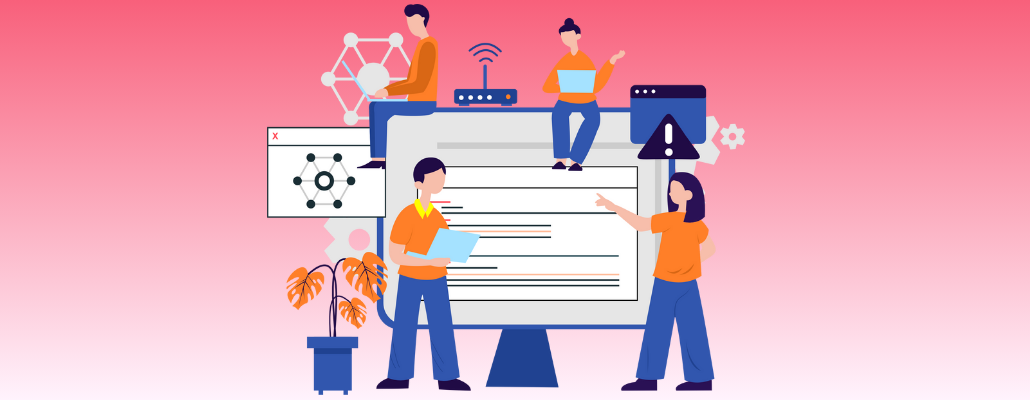
Imagine you have bought your dream car, but merely driving it is not a big deal. You have to be very vigilant regarding its maintenance. The same is the case with the software development domain. There is a term known as “software maintenance.” This is a phase that comes after software development. Software solutions go through many iterations, but failure to maintain them could lead to vulnerabilities and an inability to keep up with the competition. We are writing this blog on the topic of software maintenance. Read this comprehensive guide to learn about software maintenance, its meaning, importance, types of software maintenance, and also software maintenance models.
What is Software Maintenance?
Software maintenance is an integral part of the software development life cycle. It begins after the deployment phase and ensures the software is enhanced regularly to match the changing market demands.
After delivering and deploying the software, technology vendors often offer software maintenance services under an annual contract. The cost of software maintenance is generally calculated as an agreed percentage of the original software development cost.
Importance of Software Maintenance
Software may require maintenance for several reasons, like feature enhancement or cloud migration. Ensuring timely maintenance helps run your business competently. Few basic points on the importance of software maintenance are following.
- Software maintenance makes it easier to fix bugs, reengineer data, and prevent vulnerabilities, improving security.
- Maintenance helps remove obsolete features, reducing tech debt and improving efficiency.
- A clear maintenance plan ensures that unforeseen circumstances, like server downtimes or user request surges, don't disrupt project continuity.
- Lower long-term total cost of ownership (TCO). Regular maintenance reduces the need for costly tech-refresh cycles, reducing the overall cost of ownership.
Phases of Software Maintenance life cycle
Software maintenance is an ongoing activity that includes optimization, error correction, deletion of discarded features, and enhancement of existing features. IEEE provides a detailed framework with these major phases of software maintenance.
Problem identification phase
Identify and prioritize modification requests.
Problem analysis phase
Determine the feasibility and scope of each modification request.
Design phase:
Developers create new modules and test cases.
Implementation phase:
Modify the code, add specifications, and integrate new features.
System test phase:
Perform integration testing to ensure no new faults are introduced.
Acceptance test phase:
Verify the system meets the requirements of the modification request.
Delivery phase:
Deliver updated software and documentation to users.
Types of Software Maintenance
Software maintenance activities are performed whenever the software needs to evolve in response to trends, new technologies, user base, or business goals. There are 4 types of software maintenance. Let us understand these one by one.
1. Corrective Maintenance:
This type of maintenance is all about correcting faults that are discovered in the software once it is released into the market. Corrective maintenance guarantees that the software is designed to perform its functions and fix any issues that hinder it.
2. Adaptive Maintenance
In this case, adaptive maintenance means that the software has to change as technology and user requirements change. This type of maintenance ensures the software stays ahead of the curve, adapting to new environments and hardware.
3. Perfective Maintenance
Perfective maintenance is concerned with enhancing the capabilities of the software. This may include creating new functionalities, improving current functionalities or fine-tuning the system to make it more efficient. Perfective maintenance assists in achieving the growing user demands and makes the software relevant.
4. Preventive Maintenance:
Preventive maintenance is carried out to reduce the probability of the occurrence of future problems. It includes code optimization, system modifications, and vulnerability assessment. Preventive work is intended to make equipment stable and avoid possible difficulties in the future.
Models of Software Maintenance
The model you choose depends on your business goals, industry, and the expertise of your team. Let’s enlist models of software maintenance.
Quick-fix model:
Prioritizes rapid bug resolution with small, localized changes.
Iterative enhancement model:
Focuses on small-scale app modernization but carries risks of overlooking business justification.
Reuse-oriented model:
Reuses existing software components, reducing development time.
Boehm’s model:
Assesses software quality through hierarchical levels.
Taute maintenance model:
Involves structured phases for implementing changes, testing, and documentation.
Software Maintenance costs
Maintenance costs depend on the chosen model:
- Costs are based on time and resources used.
- Predetermined fixed costs but with limited flexibility.
- Value-based pricing is when costs are based on the perceived value to the client.
Tips to Improve Software Maintenance
- Clear documentation Maintain strong documentation for code, architecture, and design.
- Version control systems: Use systems like Git for efficient code management.
- Automated testing and regular code reviews: Use automated tools and peer reviews to enhance code quality.
- Prioritize security updates: Regularly update software for vulnerabilities.
- Implement CI/CD: Automate build, test, and deployment processes.
- Monitor and optimize performance: Set up monitoring tools to track real-time performance.
- Engage in continuous learning and feedback: Stay updated on new technologies and user feedback.
- Plan for scalability and future changes: Design software to be scalable for future adaptations.
Are you looking for proficient software maintenance services? Tangent Technologies is here to resolve your issue.
Keep your software running smoothly with Tangent Technologies' expert software maintenance services. From updates to troubleshooting, we’ve got you covered so you can propel your ideas and flourish your business.
Ready to keep things running smoothly?
Let’s maintain your success together.
Contact Tangent Technologies.
Wrapping Up
"The goal of software maintenance is to keep the software useful." - IEEE Standard 1219.
Let’s conclude the discussion, software maintenance is an important phase in the software development life cycle. It confirms that the software systems deliver the required needs of the users, are responsive to technological advancement, and are very secure and effective. The various types, phases, and software maintenance models give systematic approaches to meet the continuous needs of the software application.
In this blog, we discussed, important models and phases of software maintenance. We hope you find this blog helpful and informative.
FAQ’s
1. What is the importance of Software Maintenance?
Software maintenance keeps systems running smoothly after launch. It involves fixing bugs, updating features, and improving performance.
2. What are the four types of Software Maintenance?
The four types of software maintenance are:
- Corrective: Fixing bugs.
- Adaptive: Updating software for new environments.
- Perfective: Improving features based on user feedback.
- Preventive: Reducing future issues.
3. What is a Software Maintenance Model?
A maintenance model is a framework that guides how software maintenance activities are performed. Popular models include the V-Model and Iterative Model, helping teams plan updates and fixes more effectively.