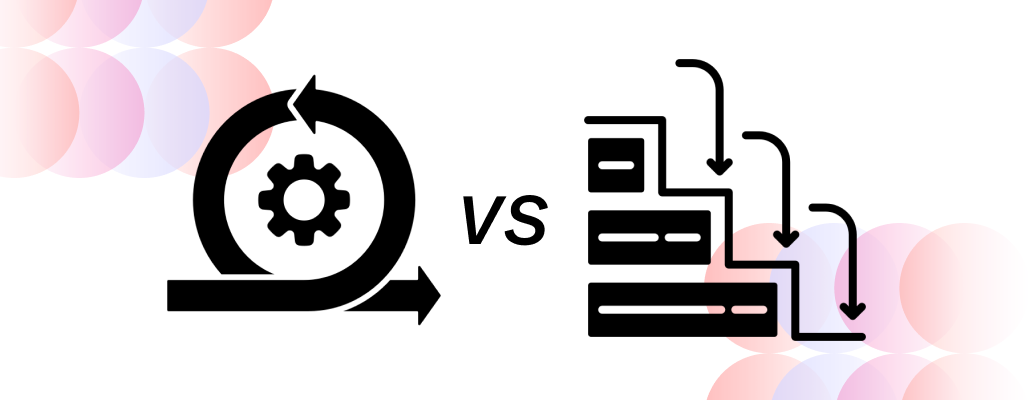
How Agile Software Development Improves Speed, Quality, and ROI

You may be frustrated with traditional software projects that take forever, exceed budgets, and deliver disappointing results. However, the agile software development process offers a proven alternative that delivers better outcomes. Moreover, agile improves speed, quality, and ROI simultaneously rather than forcing trade-offs between them.
Let us be clear: the agile software development process isn't just a methodology. Instead, it's a fundamental mindset shift that transforms how teams build software. Therefore, understanding how agile delivers superior speed, quality, and ROI helps you decide whether to adopt this approach.
We are writing this blog to help business leaders and development teams understand how the agile software development process improves all critical project metrics.
Understanding Agile Software Development Process
Before exploring the benefits, let's define agile clearly. The agile software development process breaks projects into short iterations called sprints, typically two weeks. First, each sprint delivers working software increments. Second, teams gather feedback and adjust priorities continuously.
Moreover, agile emphasizes collaboration, flexibility, and rapid iteration. Additionally, it prioritizes working software over comprehensive documentation. Furthermore, agile welcomes changing requirements throughout development. Therefore, the agile software development process adapts to reality rather than following rigid plans. Consequently, projects stay aligned with actual needs.
How Agile Improves Development Speed
Faster Time to Market
The agile software development process dramatically accelerates delivery. First, teams release working software every sprint rather than waiting months. Second, prioritizing features means critical functionality launches quickly.
Moreover, agile eliminates time wasted on unused features. Additionally, parallel work streams allow multiple features to develop simultaneously. Furthermore, reduced planning overhead means more time coding. Therefore, agile projects reach the market much faster than waterfall approaches. Consequently, businesses capitalize on opportunities before competitors.
Rapid Problem Detection
Agile catches problems early when they're cheap to fix. First, testing happens throughout development, not just at the end. Second, frequent demos reveal issues before they compound.
Moreover, short sprints mean mistakes only affect two weeks of work maximum. Additionally, continuous integration catches integration problems immediately. Therefore, speed increases because teams don't waste months building wrong solutions. Consequently, the overall timeline shortens despite more frequent testing.
Efficient Decision Making
The agile software development process speeds up decisions. First, daily stand-ups identify and resolve blockers quickly. Second, sprint planning sessions make priority decisions regularly.
Moreover, empowered teams make decisions without waiting for approvals. Additionally, clear sprint goals focus efforts efficiently. Therefore, agile eliminates delays from slow decision-making processes.
How Agile Improves Software Quality
Continuous Testing and Integration
Quality improves through constant verification in the agile software development process. First, automated testing runs throughout development. Second, code reviews happen before merging changes.
Moreover, continuous integration prevents integration nightmares. Additionally, the definition of done includes quality standards for every sprint. Furthermore, technical debt gets addressed regularly, not deferred. Therefore, quality builds incrementally rather than hoping for bug-free launches. Consequently, agile projects have fewer critical defects than waterfall projects.
Regular Feedback Incorporation
Agile quality improves through constant user and stakeholder feedback. First, sprint demos reveal usability issues early. Second, real users test features before the final release.
Moreover, feedback loops ensure building what users actually need. Additionally, problems get fixed immediately while fresh. Therefore, agile products better match user expectations. Consequently, quality means usefulness, not just bug-free code.
Team Collaboration and Ownership
The agile software development process improves quality through better collaboration. First, cross-functional teams share quality responsibility. Second, pair programming and code reviews spread knowledge.
Moreover, collective ownership means everyone maintains code quality. Additionally, retrospectives identify and fix process problems. Therefore, team dynamics directly improve output quality.
How Agile Maximizes ROI
Building Right Features
Agile maximizes ROI by focusing on valuable features. First, frequent reprioritization ensures working on the highest-value items. Second, early releases generate revenue sooner.
Moreover, agile prevents wasting budget on low-value features. Additionally, MVP approaches test ideas before major investment. Furthermore, stopping unsuccessful features early saves money. Therefore, the agile software development process delivers better ROI through smarter feature investment. Consequently, every dollar spent generates more value.
Reduced Waste and Rework
Agile eliminates waste that destroys ROI. First, building in small increments prevents months of wasted work. Second, early problem detection reduces expensive rework.
Moreover, continuous testing catches bugs when fixing is cheap. Additionally, frequent releases mean shorter debugging cycles. Therefore, agile projects waste far less budget on rework and fixes.
Faster Revenue Generation
Agile accelerates ROI timeline through earlier releases. First, working software launches in weeks instead of months. Second, early releases start generating revenue immediately.
Moreover, learning from real user guides leads to better investment decisions. Additionally, quick pivots prevent pursuing unsuccessful products for too long. Therefore, agile projects achieve positive ROI faster than traditional approaches.
Risk Mitigation
The agile software development process reduces project risk. First, short iterations limit exposure to wrong decisions. Second, frequent validation prevents building the wrong products completely.
Moreover, incremental funding decisions reduce financial risk. Additionally, working software provides proof of progress. Therefore, agile risk reduction protects ROI from common project failures.
Measuring Agile Success
Track metrics that matter for speed, quality, and ROI. First, measure velocity for sprint completion rates. Second, track defect rates and customer satisfaction.
Moreover, calculate the time to market for features. Additionally, measure the actual revenue impact from releases. Furthermore, track team satisfaction and retention. Therefore, comprehensive metrics prove agile's impact objectively.
Common Agile Implementation Mistakes
Many teams implement agile poorly, limiting benefits. First, keeping waterfall mindset while using agile ceremonies. Second, skipping retrospectives that drive continuous improvement.
Moreover, overloading sprints without a sustainable pace. Additionally, ignoring technical debt for short-term speed. Therefore, proper implementation maximizes speed, quality, and ROI benefits.
How Tangent Technologies Practices Agile
At Tangent Technologies, the agile software development process is fundamental to how we work. We've seen how genuine agile improves speed, quality, and ROI for clients consistently. Therefore, we practice agile authentically, not superficially.
We offer:
-
Sprint-Based Development: Regular deliverables and demos
-
Continuous Integration: Quality built throughout development
-
Flexible Prioritization: Adapting to changing needs
-
Transparent Communication: Regular updates and collaboration
-
ROI Focus: Building features that deliver business value
Our agile approach ensures clients see progress continuously while maintaining high quality and maximizing ROI.
Let's build your project the agile way.
Connect with Tangent Technologies today.
Conclusion
"Plans are nothing; planning is everything." – Dwight D. Eisenhower
The agile software development process improves speed through faster time to market and early problem detection. It enhances quality through continuous testing and feedback incorporation. Moreover, it maximizes ROI by building the right features and reducing waste.
Agile isn't perfect for every situation, but it delivers superior speed, quality, and ROI for most software projects. Therefore, consider adopting agile if you're frustrated with traditional development outcomes. In this blog, we've explored how agile improves all critical project metrics. We hope you find this blog useful.
FAQ's
1. How does the agile software development process improve speed?
The agile software development process improves speed by delivering working software every 2-week sprint, prioritizing critical features first, catching problems early when fixing is quick, eliminating time wasted on unused features, enabling parallel development, and reducing planning overhead.
2. Does agile sacrifice quality for speed?
No, agile improves both speed and quality simultaneously. Continuous testing throughout development, regular code reviews, constant feedback incorporation, and incremental quality building produce higher quality software faster than waterfall approaches that test everything at the end.
3. How does agile maximize ROI compared to traditional development?
Agile maximizes ROI by focusing budget on the highest-value features, generating revenue from early releases, preventing waste on unused features, reducing expensive rework through early problem detection, enabling quick pivots from unsuccessful approaches, and mitigating project failure risks.
4. What's the typical ROI improvement from adopting agile?
Organizations adopting agile typically see 20-30% faster time to market, 30-50% reduction in defects, 25-40% improvement in team productivity, and 15-25% better ROI through reduced waste and better feature prioritization. Results vary based on implementation quality.
5. Can agile work for large enterprise projects?
Yes, agile scales to large projects through frameworks like SAFe, LeSS, or Nexus. Large projects use multiple agile teams coordinating work. However, scaling requires discipline, strong leadership, and proper training. The agile software development process benefits apply regardless of project size.